Looking Back at 2025 and What We’re Watching in 2026
Rising STI rates, major HPV vaccination gains, slow but promising diagnostics, the rise of self-care, and what’s next for vaccines and policy reform.
As 2025 draws to a close, the STI field is at a pivotal moment, facing rising infections, decreased funding, and a strained global health landscape. Yet there is real promise in new innovations to effectively test for and ultimately treat and prevent new infections.
This year, AVAC and partners focused on providing the evidence and tools needed to push for smarter investments and equitable access to STI prevention and diagnostics. Read on for key developments from 2025 and issues to watch in 2026.
2025 in Review
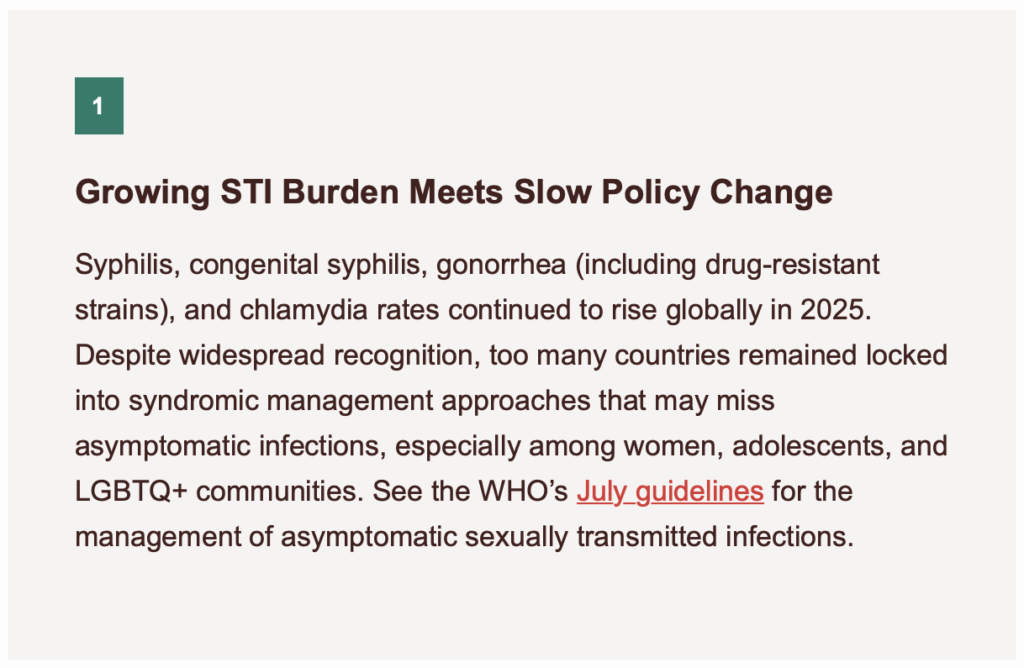
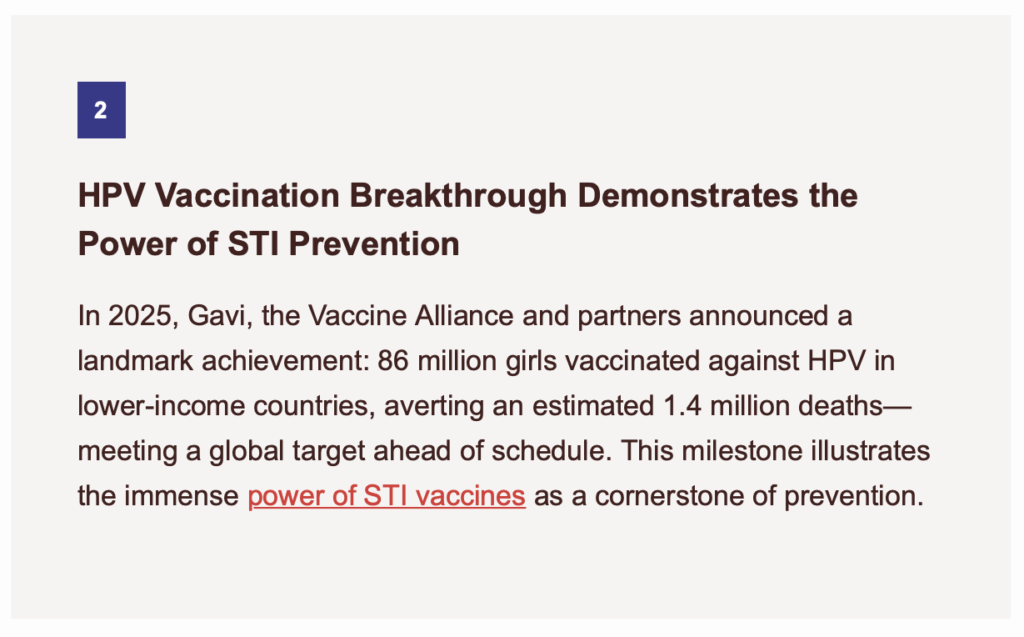
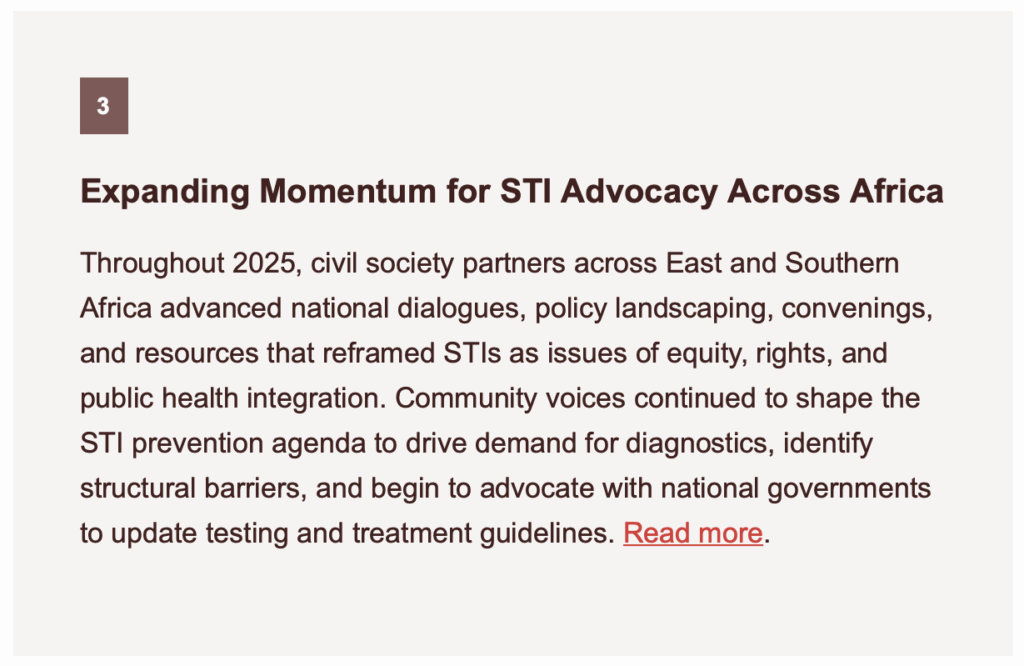
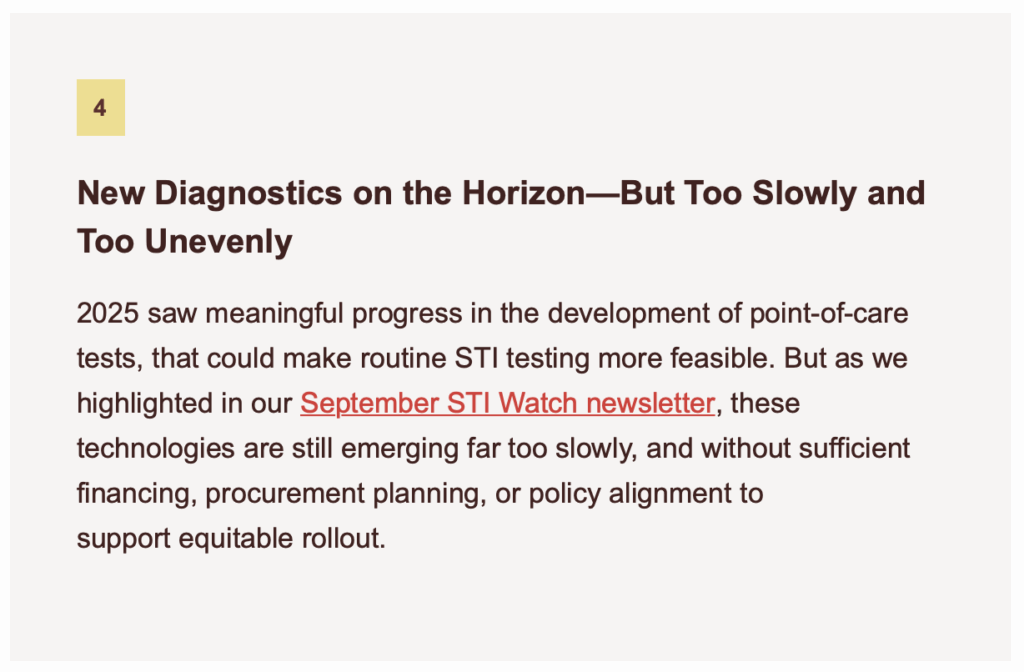
What We’re Watching in 2026
Self-Care as a Core Strategy
Self-care is no longer an experimental concept; it’s essential. In 2026, we will continue tracking whether governments:
- Adopt and fund national self-care policies;
- Integrate self-collection and self-testing within primary care and SRH platforms;
- Ensure user-centered options are affordable and widely available.
Diagnostics Are Coming, But Not Fast or Equitable Enough
New molecular tests continue to emerge for the detection of gonorrhea, chlamydia, syphilis, HPV, and trichomoniasis. But without political will and coordinated financing, they will remain out of reach. In 2026, we’ll monitor:
- Whether countries update testing and screening guidelines;
- Alignment of global and national investments with diagnostic priorities;
- Progress toward moving beyond symptom-driven care;
- Efforts to ensure affordability and equitable access.
Moving Beyond Syndromic Management
Syndromic management fails to identify most STIs, especially asymptomatic ones. We will continue building the evidence and advocacy necessary to push governments toward diagnostic-led strategies that find infections early. In 2026 we’ll track:
- National guideline revisions;
- Budget and procurement changes;
- Implementation challenges and opportunities.
STI Vaccine R&D Is Advancing—but Equity Remains at Risk
Scientific progress is accelerating for STI vaccine development—particularly for gonorrhea, and group B meningococcal vaccines—but in other areas, progress is slow, fragmented and underfunded. In 2026, we will follow:
- Investment levels in STI vaccine research and development;
- Progress in the pipeline;
- Whether there is investment to build equity, community input, and Good Participatory Practice (GPP) into R&D and rollout plans.
Despite challenges in global health financing and political instability, the STI field is entering 2026 with renewed momentum. With affordable diagnostics, routine testing, new preventive vaccines under development, user-centered options, and sustained investment, the trajectory of the STI epidemic can be changed.
We will continue to track the research and developments, share the needs and insights from communities, and provide resources to ensure a more equitable future for STI prevention.