AVAC and Partners Launch New STI Advocacy Agendas in Kenya, South Africa and Zimbabwe
AVAC and partners are proud to share three new national sexually transmitted infections (STIs) advocacy agendas for Kenya, South Africa and Zimbabwe, providing coordinated agendas to elevate STIs as a national health priority and accelerate actions on R&D and delivery of STI vaccines, diagnostics, prevention and care. Join us Tuesday, 12 May to learn more about these country-led advocacy agendas.
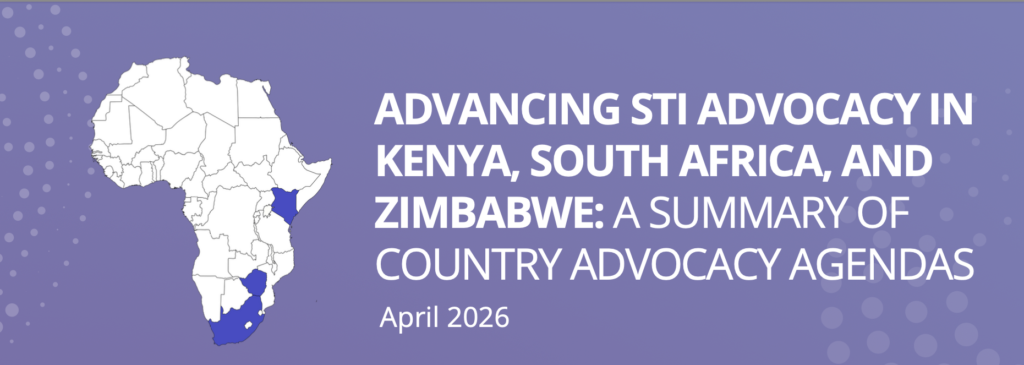
STIs remain widespread, underdiagnosed and persistently underprioritized around the world. In Kenya, South Africa and Zimbabwe, gaps in awareness, surveillance data and diagnostics, along with challenges delivering essential testing and treatment services, continue to limit effective and equitable STI prevention, treatment and care. This persists despite the availability of proven prevention tools, including vaccines and diagnostics, and growing evidence of the health and economic consequences of inaction.
The country-specific agendas highlight shared priorities in response to these gaps: strengthening surveillance and data systems; expanding access to diagnostics; building health workforce capacity; and preparing health systems for emerging tools such as additional STI vaccines.
These advocacy agendas were developed by partners in Kenya, South Africa and Zimbabwe through cross-country collaborations that brought together researchers, advocates, civil society organizations and policy experts. Over several months, they analyzed the STI landscape in each country and identified the most urgent opportunities for policy change and investment.
“Together, these three agendas lay the groundwork for a new cross-country STI advocacy network in East and Southern Africa,” said Alison Footman, PhD, senior program manager of STIs at AVAC. “Each agenda reflects country-specific priorities, but, collectively, they elevate community voices, strengthen policy engagement and build regional momentum to ensure STI prevention, diagnosis and care receive the sustained attention they deserve.”
Read More About Their Priorities
Advancing Diagnostics, Data and Community-Led Advocacy
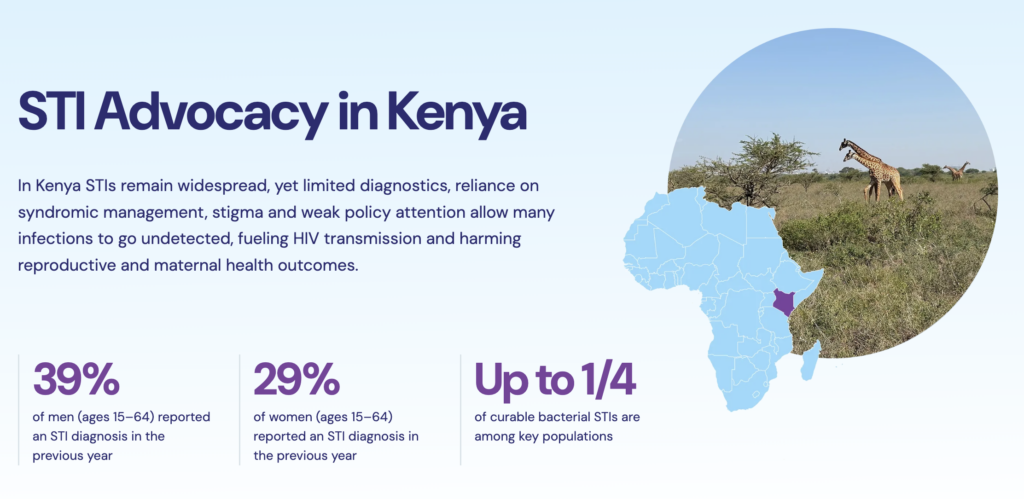
“Kenya’s STI advocacy agenda responds to a substantial STI burden affecting both the general population and key populations,” said Felix Mogaka, MBChB, Kenya advocacy partner. “Our work and those of our partners show that a significant proportion of infections remain undiagnosed or untreated, in part because Kenya continues to rely heavily on syndromic management for STI treatment, an approach that relies on self-reported symptoms and can miss many asymptomatic infections.”
Kenya’s advocacy agenda calls for updating national STI policies, strengthening health workforce capacity and ensuring that community organizations play a central role in advocacy and awareness.
Bridging Research, Policy and Implementation
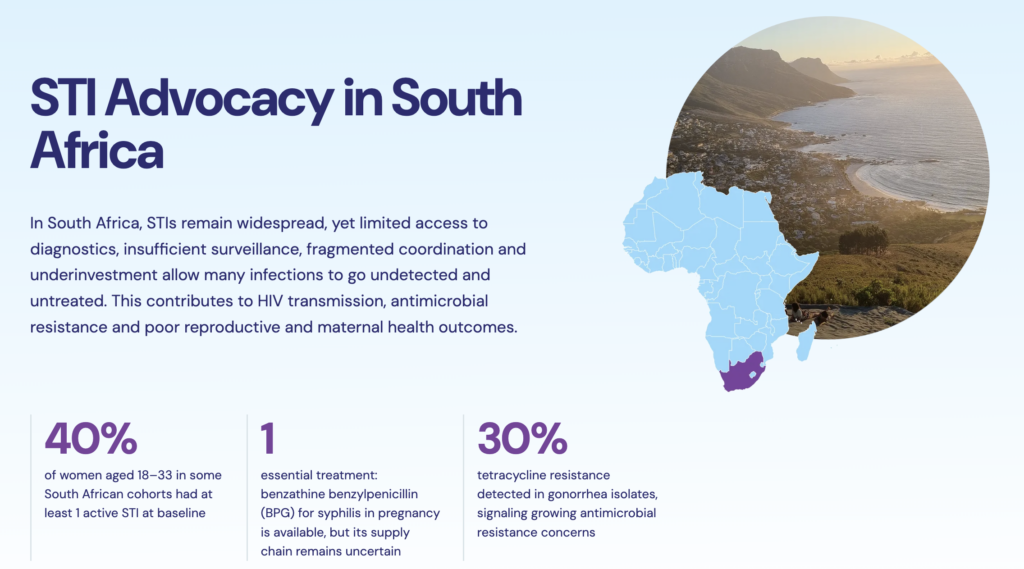
“STIs in South Africa have too often been treated as a side issue in public health discussions,” said Alex de Voux, PhD, South Africa advocacy partner. “Our vision is to build a stronger, more coordinated response, one where communities are informed and empowered, health providers are supported with the right tools, and sexual health is recognized as a fundamental part of public health.”
South Africa’s agenda identifies opportunities to expand access to credible STI information, strengthen advocacy capacity across communities, healthcare providers and policymakers, and promote a positive, rights-based approach to sexual health that improves prevention, diagnosis and care.
Strengthening Evidence, Integration and Investment
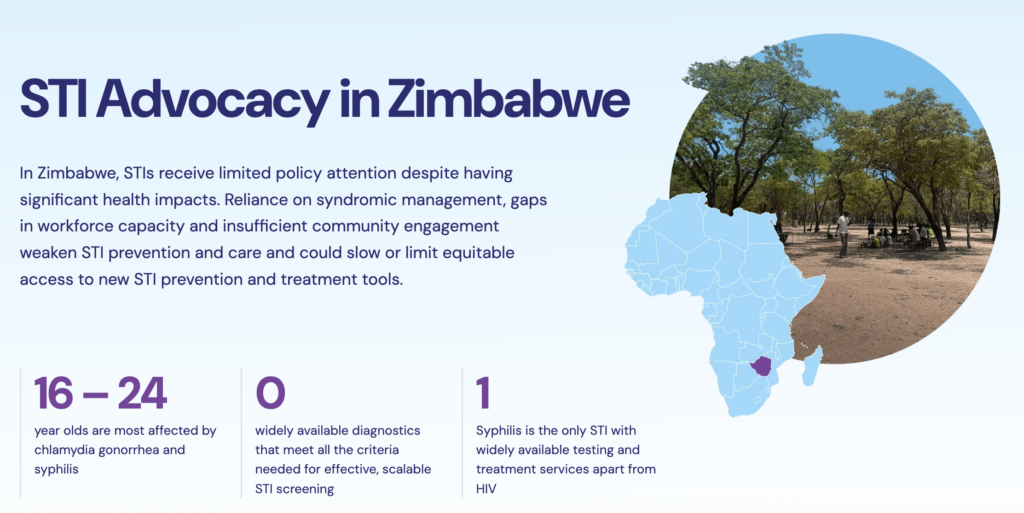
“Zimbabwe has an opportunity to strengthen its STI response by bringing greater alignment between national leadership, healthcare providers and communities,” said Chido Dziva Chikwari, PhD, epidemiologist and global health practitioner in Zimbabwe. “When national policies, frontline care and lived experience are connected, Zimbabwe will be far better positioned to improve STI prevention, diagnosis and care.”
Zimbabwe’s agenda calls for increased advocacy, expanded diagnostic testing, greater integration of STI services with other health programs and stronger domestic financing for STI prevention and research.
A New Platform for STI Advocacy
The launch of these agendas marks the start of a sustained cross-country STI advocacy network in East and Southern Africa to raise the profile of STIs within national and global health agendas.
AVAC and its partners will continue working together to amplify the agendas, engage policymakers and mobilize greater investment in STI prevention and care.
“These agendas show what is possible when advocates, researchers and communities come together to define solutions,” said Footman. “We are incredibly proud of the leadership and commitment of our partners who developed these priorities. The next step is ensuring that governments, donors and global health partners act on them.”