There is no shortage of evidence about what needs to change in the STI response. The challenge, and the opportunity, is turning that evidence into action: stronger policies, better diagnostics, stronger data systems, and prevention and treatment options that reach people who need them.
This issue of STIWatch looks at what it takes to make that happen. From advocates in Kenya, South Africa and Zimbabwe moving country-led priorities forward, to our new Advocates’ Guide to STI Syndromic Management examining the opportunities and limitations of an approach still relied upon in many settings, we look at where advocacy can help close persistent gaps in STI prevention, diagnosis and care.
We also highlight new data and guidance shaping the field and launch STIWatch Perspectives, a new series bringing voices from across the STI community into conversations about the evidence, policies and implementation decisions shaping the future of STI prevention and care.
From Agendas to Action: Country-Led STI Advocacy
Earlier this year, AVAC and partners in Kenya, South Africa and Zimbabwe launched three country-led STI advocacy agendas designed to elevate STIs as national and regional health priorities.
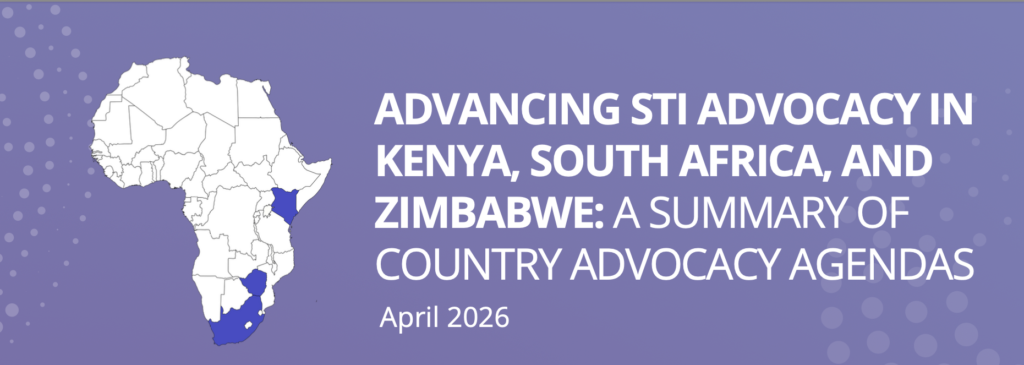
Developed through collaboration among researchers, advocates, civil society and policymakers, the agendas lay out a shared vision for strengthening the STI response while reflecting the priorities of each country. Across Kenya, South Africa and Zimbabwe, they call for action on persistent gaps, from limited access to diagnostics and STI data to workforce challenges and insufficient political attention and investment. But an agenda is only as powerful as the action it inspires. Partners are now building national advocacy hubs to bring these priorities to policymakers, strengthen community leadership and push for concrete changes in STI policies, programs and investment. Explore the country advocacy agendas and meet the partners driving this work.
The Advocates’ Guide to STI Syndromic Management
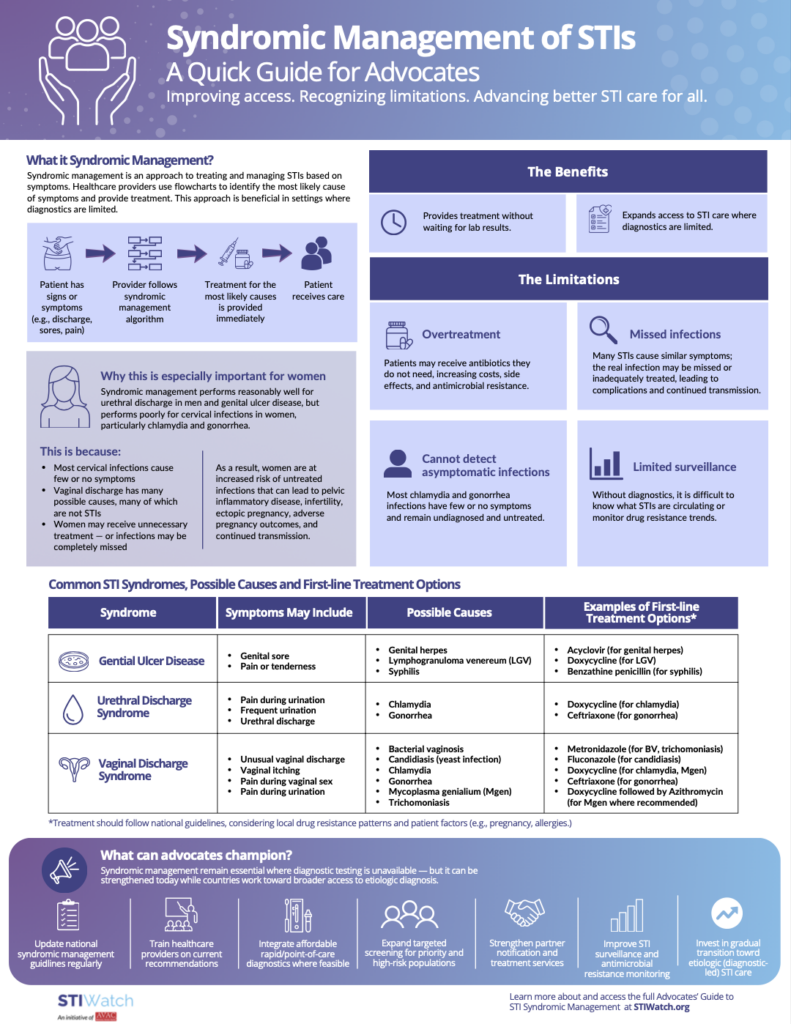
In many settings, STIs are still diagnosed, treated, and managed based on symptoms rather than diagnostic testing. For decades, syndromic management has made STI care possible in settings with limited access to diagnostics. It remains an essential approach, but it can also mean missed infections, unnecessary treatment and important gaps in care, particularly for women.
Our new Advocates’ Guide explores what works, where the gaps are and how advocates can push for stronger STI care and access to diagnostics.
The WHO STI Prevalence Atlas Highlights the Urgent Need to Strengthen the Global STI Evidence Base
Where are STIs most prevalent? Who is most affected? And where are the biggest gaps in what we know?
This blog post from AVAC’s Grace Tetteh and the University of Cape Town School of Public Health’s Alex de Voux and Natalie Shaetonhodi looks at the STI Prevalence Atlas, a new tool from WHO designed to make STI prevalence data easier for advocates, researchers and policymakers to explore and use. The Atlas brings data together in one place to help illuminate both the burden of STIs and the persistent gaps in surveillance and evidence that make it harder to design effective responses.
DoxyPEP: From New Guidance to Equitable Access
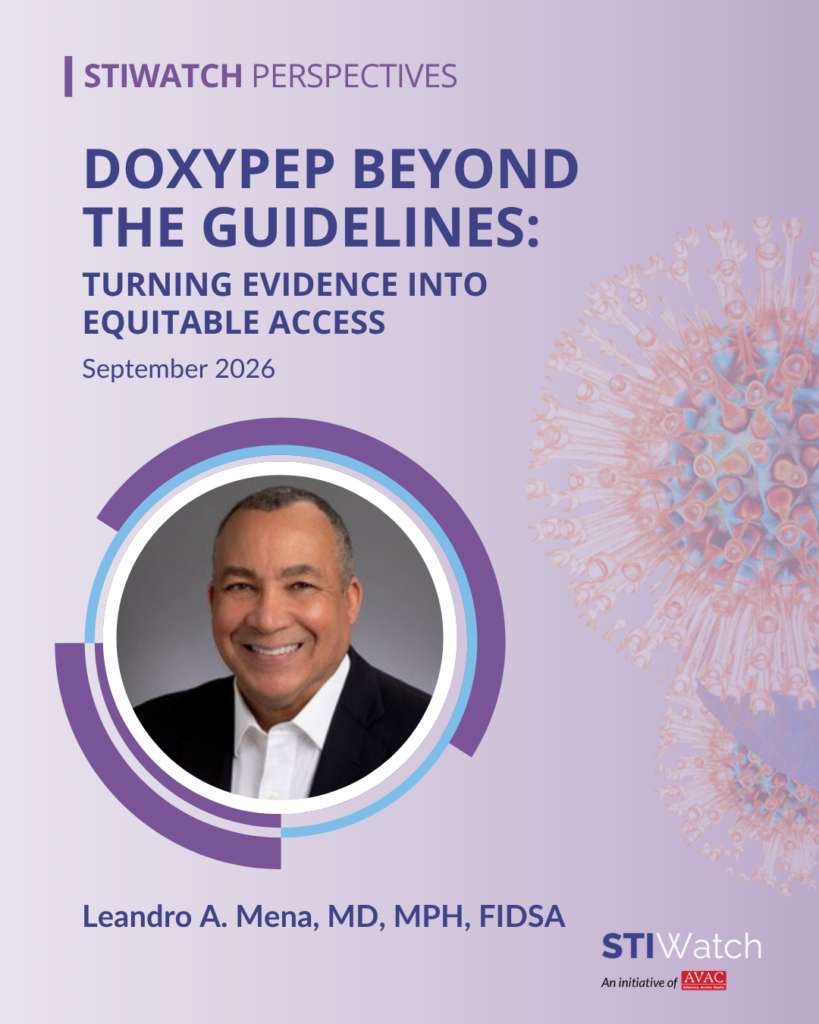
DoxyPEP is an important new addition to STI prevention, with strong evidence for reducing syphilis and chlamydia infections and growing momentum around its introduction. But a recommendation alone does not create access. Who ultimately benefits will depend on whether communities have affordable medication, trusted services, accurate STI testing and the surveillance systems needed to monitor antimicrobial resistance.
In the first installment of our new STIWatch Perspective blog series, Leandro Mena of NMAC and Emory University reflects on conversations at AIDS 2026 and what it will take to translate WHO’s new DoxyPEP recommendations into real-world impact. He makes the case for implementation grounded in informed choice and community leadership, and for investment in the diagnostic and surveillance infrastructure needed to expand access responsibly and equitably.
STI Management Guidelines: From Syndromic to Etiologic
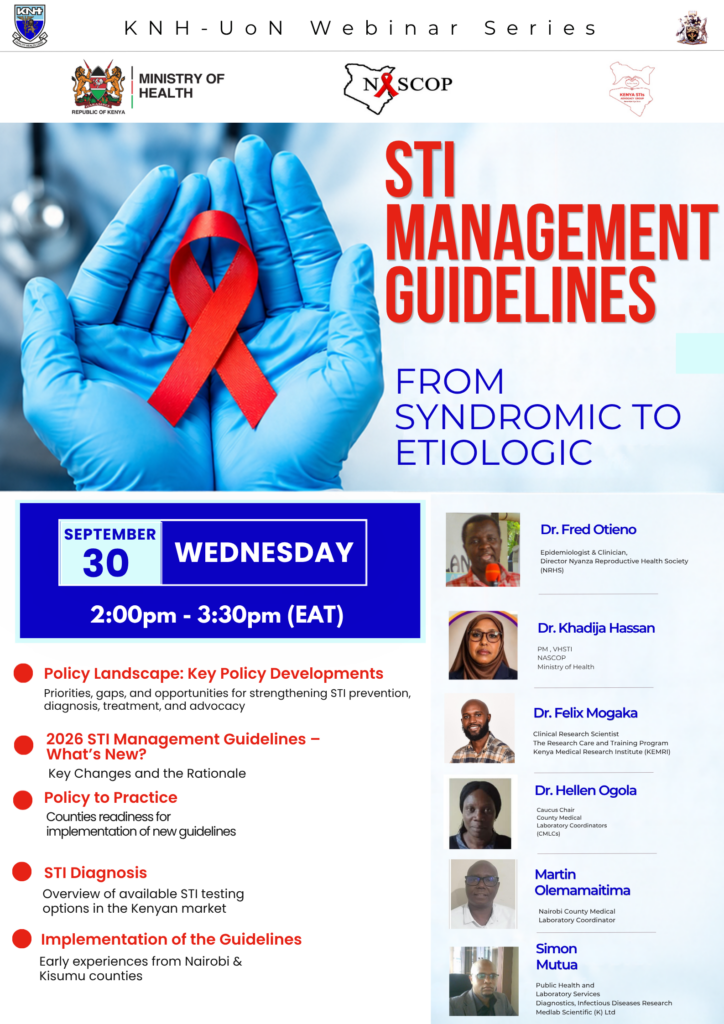
Join a webinar hosted by Kenyatta National Hospital and the University of Nairobi on Wednesday, September 30 for a discussion of the new STI Management Guidelines. Speakers, including AVAC’s STI advocacy partner Felix Mogaka of Kenya Medical Research Institute, will discuss key updates on the policy landscape and implementation, what has changed in the STI Management Guidelines, STI testing options in Kenya, and early experiences implementing the guidelines.
Learn more here, and register here.
What We’re Reading
A roundup of research, reports, commentary and other resources shaping conversations across the STI field.
- Towards Elimination of Sexually Transmitted Infections: Research Developments and Vaccine Uptake—Journal of the International AIDS Society
- Understanding antibiotic access in the WHO African Region: results of a multicountry survey and stakeholder roundtables—World Health Organization
- The diagnostics deficit: Funding, access, and preparedness gaps in African health systems—PATH
- Improving HIV and STI Prevention and Care for Heterosexuals—O’Neill Institute
- Syphilis Testing Is Terrible — Now Try Interpreting It—NEJM Voices
- From syndromic management to diagnostic-led management: a report from an expert meeting on introducing sexually transmitted infection testing in low-resource settings—Sexually Transmitted Infections Journal
- Estimating the Value of Novel Tests for Active Syphilis in Zimbabwe: How Much Overtreatment Can Be Avoided?—Sexually Transmitted Diseases Journal
- WHO guideline for screening and treatment of cervical pre-cancer lesions for cervical cancer prevention: use of human papillomavirus (HPV) DNA genotyping—World Health Organization
- Why a surge in sexually transmitted infections in Europe should worry everybody—The Guardian