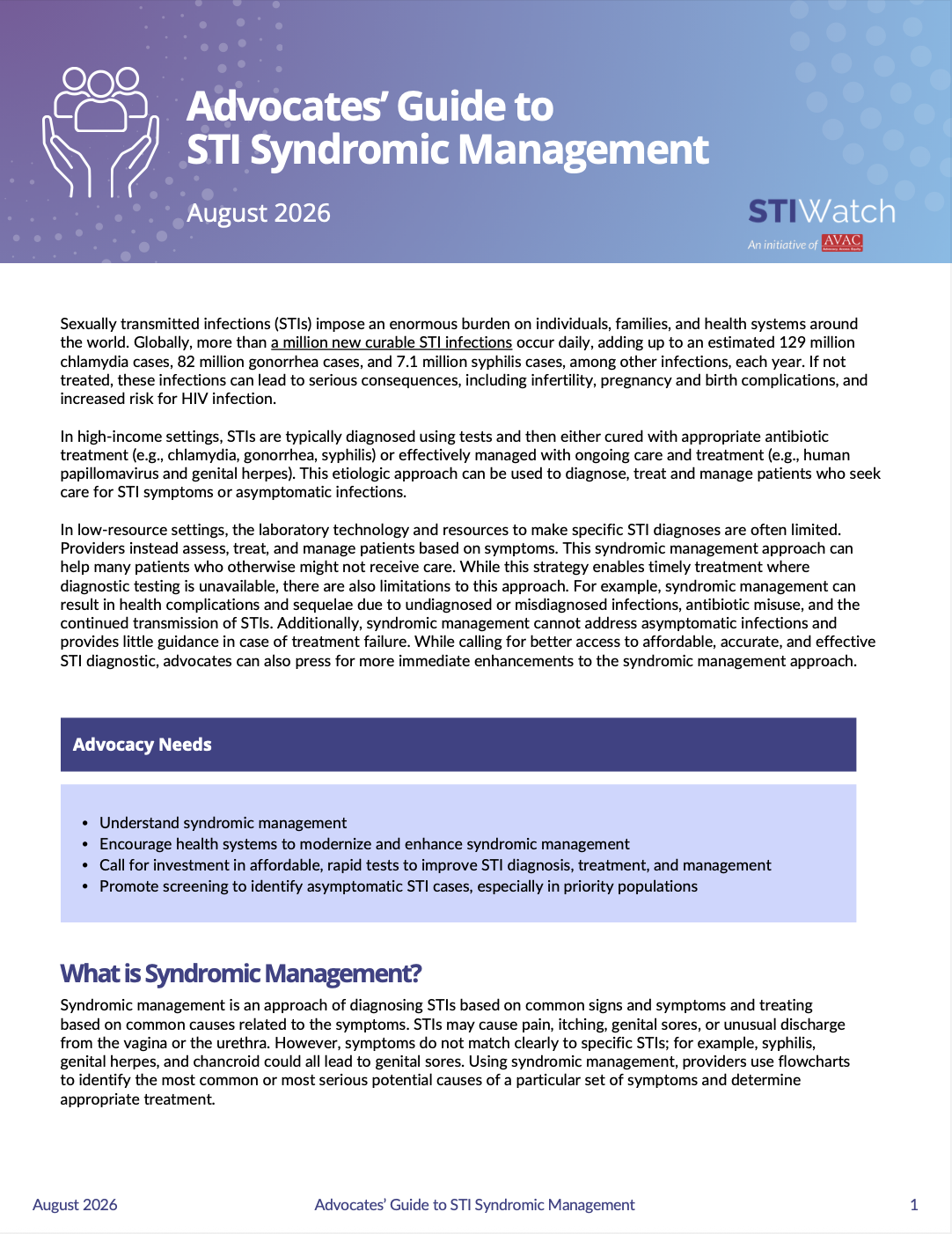
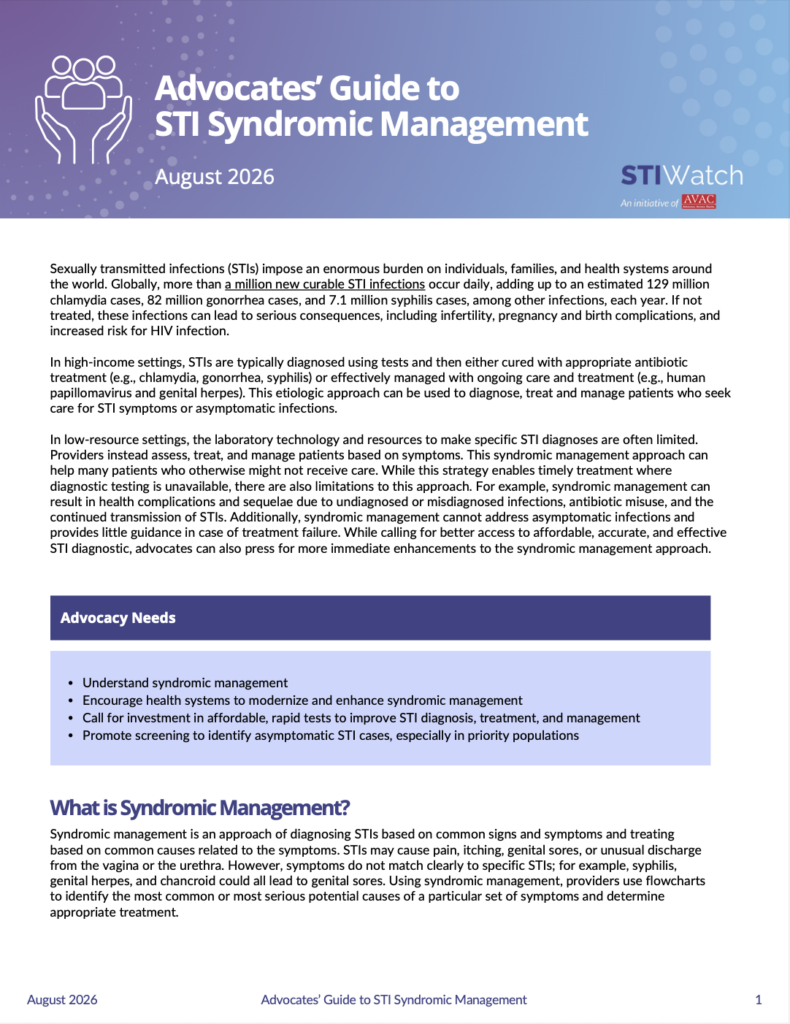
In May, partners in Kenya, South Africa and Zimbabwe shared advocacy agendas to elevate sexually transmitted infections (STIs) as a public health priority in their countries. Each agenda highlighted a common challenge: the limitations of syndromic management. In response, we’re excited to share two new resources: our new Advocates’ Guide to STI Syndromic Management and accompanying one-page summary, along with a new publication in the journal Sexually Transmitted Infections.
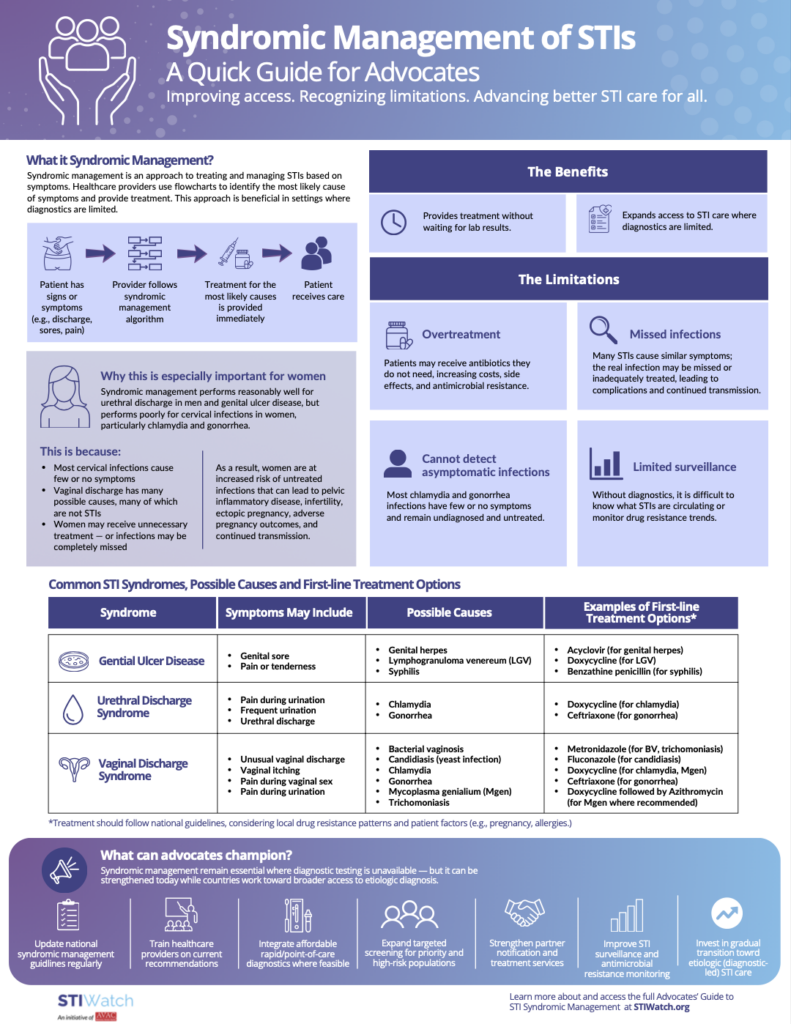
Syndromic management, diagnosing, treating, and managing STIs based on symptoms rather than laboratory testing, has made STI care possible where diagnostics are limited. This approach can miss asymptomatic infections, lead to over-or-under-treatment, contribute to antimicrobial resistance, and limit the data countries need to understand their STI epidemics.
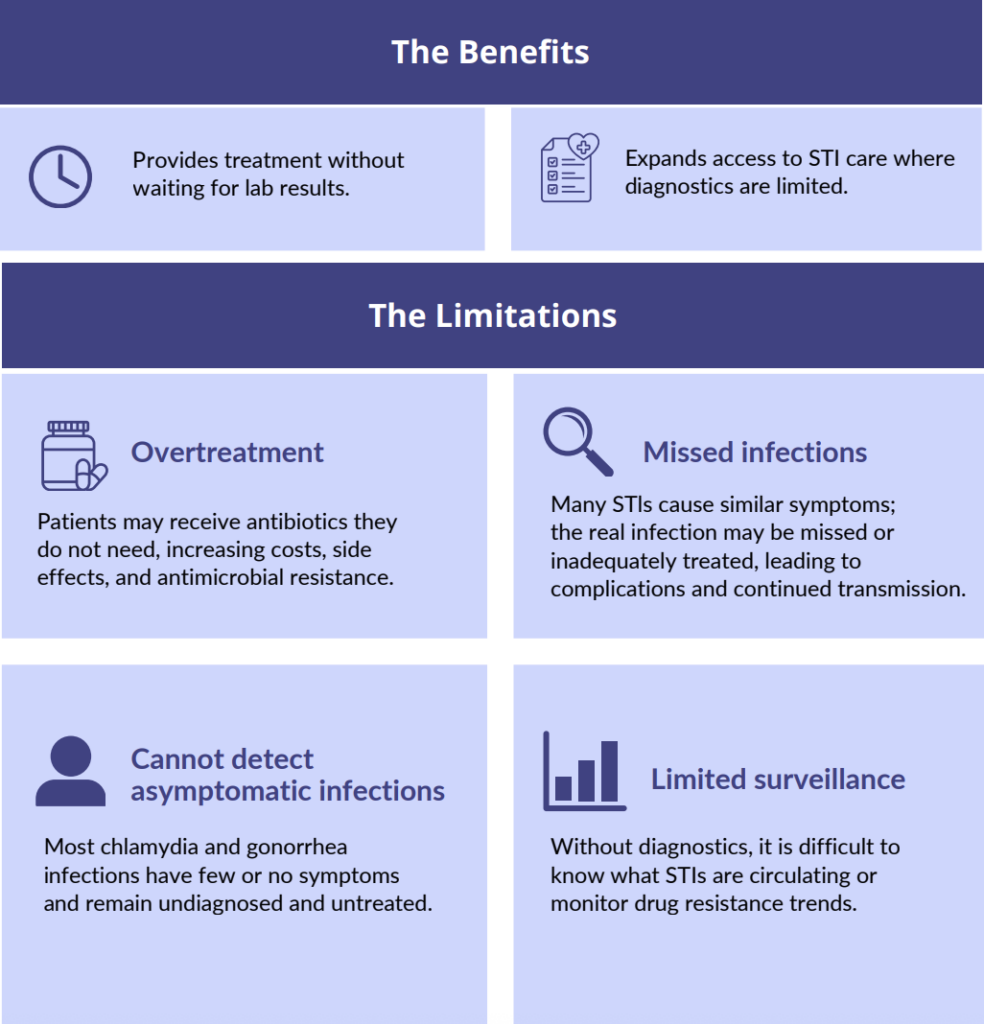
These limitations are particularly important for women. Syndromic management does not perform as well for chlamydia and gonorrhea infections, many of which cause few or no symptoms among women.
The new Advocates’ Guide to STI Syndromic Management explains how the approach works, where gaps remain, and what advocates can champion, from stronger guidelines and provider training to targeted screening and greater access to rapid diagnostics.
From syndromic management to diagnostic-led management: a report from an expert meeting on introducing sexually transmitted infection testing in low-resource settings
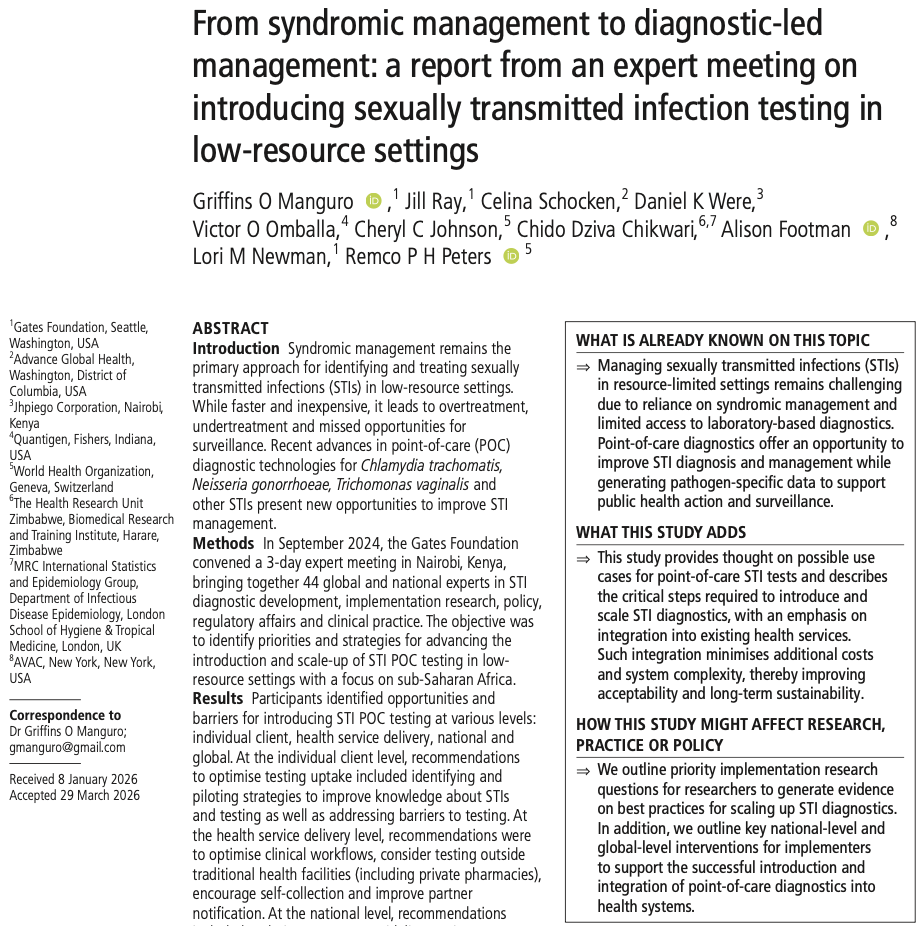
This new publication in the journal Sexually Transmitted Infections explores how STI point-of-care tests could help countries move toward a diagnostic-led management and what it will take to introduce these technologies in resource-limited settings. AVAC’s The article was authored by Griffins Manguro, Jill Ray, Celina Schocken, Daniel Were, Victor Omballa, Cheryl Johnson, Chido Dziva Chikwari, AVAC’s Alison Footman, Lori Newman, and Remco Peters.
Together, these resources can help advocates push for more accurate, equitable and effective STI care.
Learn more at www.STIWatch.org.
Explore Our Resources
- Advocates’ Guide to STI Syndromic Management
- DoxyPEP Beyond the Guidelines, a guest piece from Leandro Mena
- Advancing STI Advocacy: A Summary of Country Advocacy Agendas
- Kenya STI Advocacy Agenda
- South Africa STI Advocacy Agenda
- Zimbabwe STI Advocacy Agenda