Grace Tetteh, AVAC
Alex de Voux, University of Cape Town School of Public Health
Natalie Shaetonhodi, University of Cape Town School of Public Health
 “Reliable data is one of the most powerful tools we have for improving STI prevention and control.”
– Alex de Voux, University of Cape Town School of Public Health
The World Health Organization (WHO) recently released STI Prevalence Atlas, a global resource consolidating prevalence and test positivity data on five sexually transmitted infections, including chlamydia, gonorrhea, HSV-2, syphilis, and trichomoniasis, in low- and middle-income countries (LMICs). This atlas is the first global, open access STI prevalence database that aims to address gaps in country-level evidence and is an important initial effort towards establishing a foundation for understanding the global burden of STIs.
A team from the University of Cape Town, including Alex de Voux and a group of students, Natalie Shaetonhodi, Jane Phiri, Andrea Madden, and Saleha Suleman, joined a network of international collaborators working under WHO’s guidance to support the Atlas development. de Voux and her team focused on systematically reviewing scientific literature, extracting STI prevalence data, verifying study characteristics and ensuring that information was captured in a standardized format suitable for inclusion in the database.
 “One of the biggest lessons I learned from working on the STI Atlas, was how much valuable STI data already exists, but also how fragmented they are and how difficult they can be to access and use in a meaningful way. Bringing together nearly a thousand studies provided a much clearer picture of STI epidemiology across low- and middle-income countries, while also highlighting variability in the diagnostic methods, testing algorithms, and reporting of curable STIs across studies.”
– Natalie Shaetonhondi, University of Cape Town School of Public Health
While the WHO STI Atlas is a milestone in strengthening the global STI evidence base, it also highlights the significant gaps that remain, underscoring the urgent need for stronger country-level surveillance and comprehensive data collection to build a more complete and actionable evidence base for STI prevention, diagnosis, treatment, and control.
Reflecting on this milestone AVAC’s STI Advocacy program lead, Alison Footman, says, “The WHO STI Prevalence Atlas is an important step forward, but it also makes clear how much we still do not know. As advocates, we need to push for sustained investment in country-level surveillance and comprehensive data collection so that policymakers, researchers, healthcare professionals, and communities have the evidence they need to strengthen STI prevention, diagnosis, treatment, and control.”
The gaps highlighted by the STI Atlas reinforce the importance of continued advocacy in settings like South Africa, where investments in stronger surveillance systems and improved data collection can contribute to a more complete national and global evidence base. de Voux, in partnership with Mandisa Mdingi, Research Manager at the Foundation for Professional Development, leads AVAC’s South Africa STI Advocacy Hub focusing on elevating STIs as a national priority by strengthening access to credible information, supporting evidence-based decision making, and advancing more equitable STI prevention, diagnostics, and treatment.
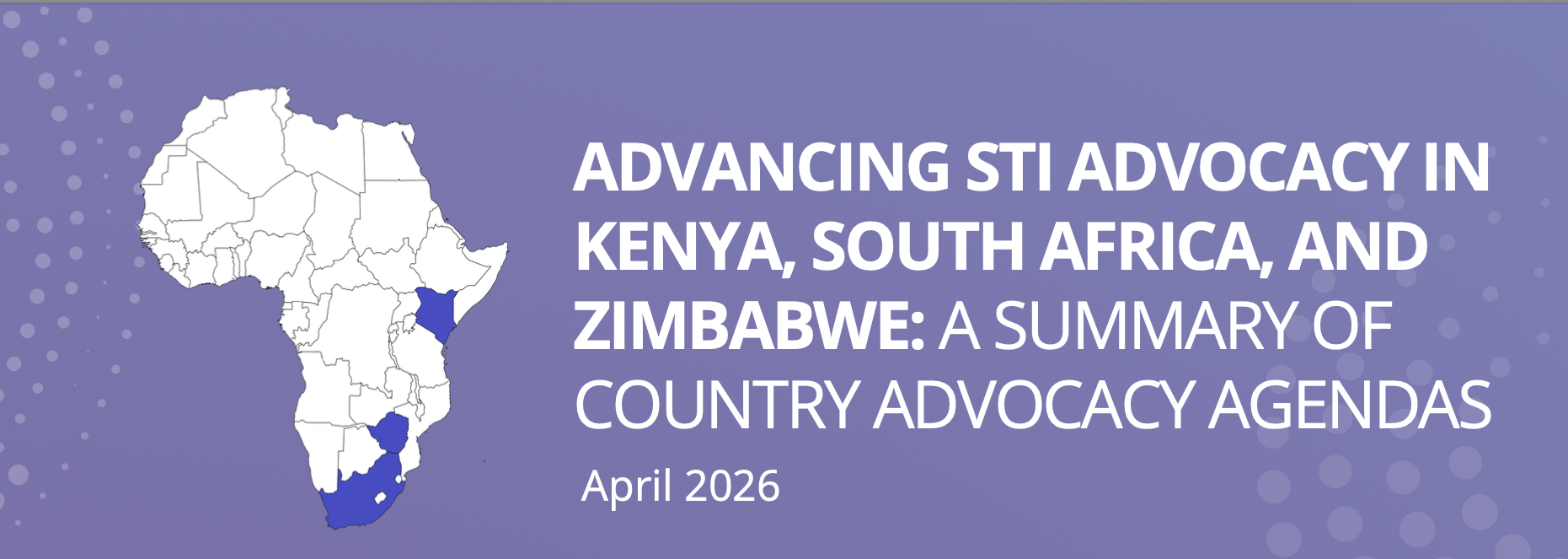
The STI Atlas reinforces many of the priorities outlined in the advocacy agendas developed by AVAC’s STI Advocacy Hub partners in Kenya, South Africa and Zimbabwe by demonstrating both the value of strong STI surveillance systems and the evidence gaps that continue to limit effective public health action.
While the Atlas provides an important global picture of STI epidemiology, it also highlights the need for stronger country-level surveillance, improved reporting, and expanded availability of pathogen-specific data; echoing the agenda’s call for increased access to credible STI information. This alignment underscores why closing the surveillance gaps is not simply a data priority, but an essential part of strengthening the STI response, as Mdingi explains:
 “South Africa has made significant progress in tackling HIV, but sexually transmitted infections remain a substantial and often under-measured public health challenge. Investing in stronger STI surveillance is not simply about collecting more data; it is about generating the evidence needed to prevent infections, direct resources to where they will have the greatest impact and ensure that no communities are left behind.”
– Mandisa Mdingi, Foundation for Professional Development (FPD) Research Unit
Across all three country contexts, the Atlas provides a valuable global resource while also surfacing remaining gaps in the evidence available to inform national STI responses. Country-level advocacy is critical to elevating stronger STI surveillance as national priorities to improve research, policy decisions, program implementation, service delivery, and investment.
STI surveillance is a core public health investment, not an optional research activity. Reliable data are essential for identifying populations with unmet needs, directing resources efficiently, evaluating program impact and making the case for sustained investment in sexual and reproductive health services.
The STI Atlas is a reminder that improving STI outcomes begins with improving the data that informs decisions. As countries work to strengthen surveillance systems, expand access to diagnostics, and improve the quality and use of STI data, they are not only improving their own ability to respond to STIs, but they are also contributing to a stronger global understanding of where the burden is greatest and where resources are needed most.
About the Contributors
Grace Tetteh led the development and writing of this blog, coauthored with Alex de Voux and Natalie Shaetonhodi. Alex, Natalie, Jane Phiri, Andrea Madden, and Saleha Suleman contributed to the development of the WHO STI Prevalence Atlas. Alex and Mandisa Mdingi also lead AVAC’s South Africa STI Advocacy Hub, connecting STI evidence with advocacy. Alison Footman leads AVAC’s STI portfolio.
Alex de Voux: Alex de Voux is a Senior Lecturer in the Division of Epidemiology and Biostatistics at the University of Cape Town, where she combines academic rigor with a deep commitment to improving sexual and reproductive health outcomes. Her career has been shaped by a passion for addressing health inequities and advancing evidence-based interventions for HIV and sexually transmitted infections (STIs). With a strong foundation in infectious disease epidemiology, Alex has developed expertise in designing and evaluating interventions that bridge the gap between research and practice. Her work spans mixed-methods research, health systems evaluation, and policy engagement, with a particular focus on women’s health and vulnerable populations. She collaborates with local and international partners to strengthen STI prevention and treatment strategies in resource-limited settings.
Mandisa Mdingi: Mandisa Mdingi is a nurse, public health researcher, and Research Manager at Foundation for Professional Development (FPD) Research Unit, where she leads the implementation of sexually transmitted infection (STI) research projects in East London, Eastern Cape. Her clinical nursing background informs her patient-centered and systems-focused research leadership. She is also a PhD candidate at the Department of Medical Microbiology, University of Pretoria, her research focuses on molecular epidemiology and antimicrobial resistance of Chlamydia trachomatis and Neisseria gonorrhoeae. Mandisa advocates for strengthened STI management through improved diagnostics, antimicrobial resistance surveillance, and equitable access to quality sexual and reproductive health services. Her work bridges clinical care, molecular science, and policy to advance sustainable STI prevention and control strategies.
Natalie Shaetonhodi: Natalie Shaetonhodi is an epidemiologist and researcher specializing in infectious disease surveillance and implementation science. She is completing a PhD in Epidemiology and Biostatistics at UCT, where her research examines the epidemiology of curable sexually transmitted infections during pregnancy in South Africa and the role of etiological point-of-care screening in public health settings. Her broader experience encompasses disease surveillance, diagnostics, digital health, data analytics, and programme evaluation, with a focus on translating epidemiological intelligence and research evidence into actionable recommendations. Natalie holds master’s degrees in epidemiology and clinical social work and currently supports national and regional public health initiatives across Africa.
 Jane Phiri: Jane Phiri is a public health professional with a Master of Public Health and a background in nursing and midwifery. Her work spans public health research, health systems strengthening, health financing, and policy analysis, with a particular interest in improving access to quality and equitable healthcare. She has experience working across research and policy settings, supporting evidence generation, data collection and analysis, and technical assistance to health-sector stakeholders. Jane has contributed to work in HIV, sexual and reproductive health, and sexually transmitted infections, and is passionate about translating research into practical approaches that strengthen health systems and improve health outcomes.
 Andrea Madden: Andrea Madden is an Environmental and Public Health Practitioner and Researcher in the Division of Epidemiology and Biostatistics, School of Public Health, Faculty of Health Sciences, at the University of Cape Town (UCT). She holds a NDip and B-Tech degree in Environmental Health from CPUT, as well as a PGDip in Public Health from UNISA. Her research interests include Non-communicable (NCD) and Infectious Disease Epidemiology, Planetary Health, Climate & Health Impacts and Sustainability Practices, and Sustainable Healthcare Education.
 Saleha Suleman: Saleha Suleman is a public health researcher with a background in biomedical science and health policy and systems. She holds an MPH from the University of Cape Town and has experience across public health research, health policy, STIs, health systems, digital health and advocacy. Her interests include health equity, evidence-informed policy and strengthening health systems. As part of the WHO STI surveillance project, she contributed to the development of STIAtlas through systematic screening of research literature and extraction of relevant data across key domains. She is interested in making evidence useful and accessible to support better decision-making, particularly in contexts where strong data and responsive health systems are essential to improving health outcomes.